

 Русский
 日本語
日本語 한국어
한국어 中文 (中国)
 Việt
Việt
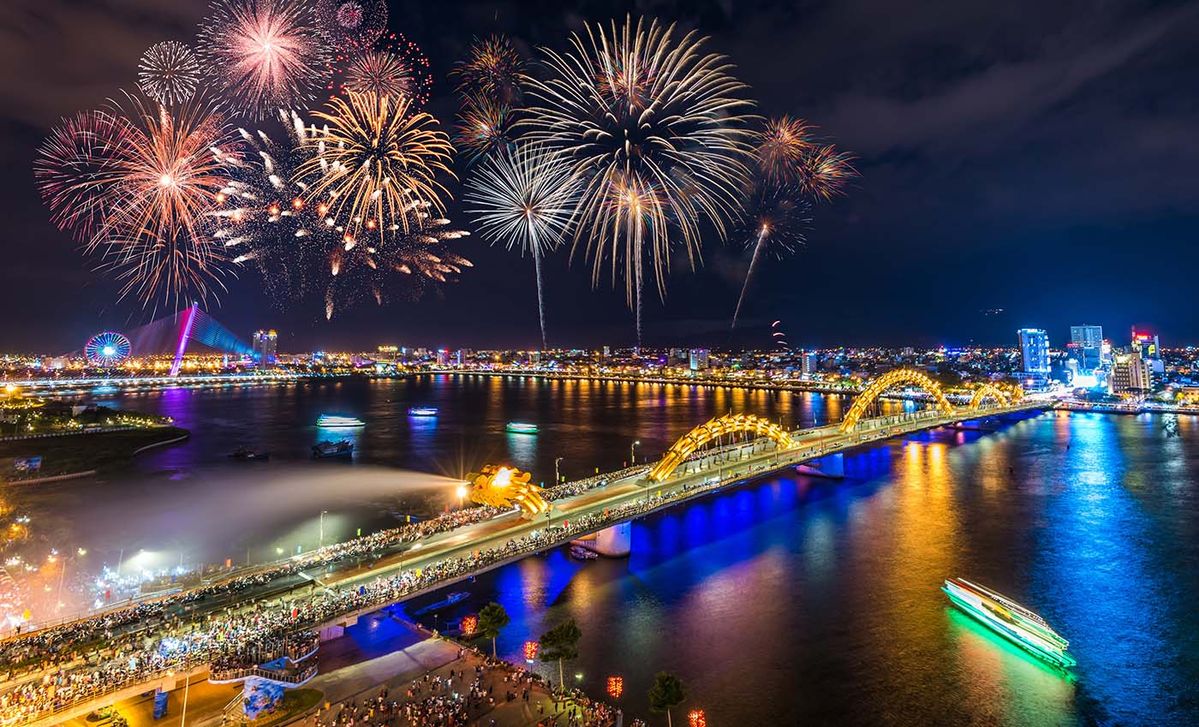
If you’ve ever searched for “Where to go in Da Nang,” you’re probably familiar with names like Ba Na Hills, My Khe Beach, Dragon Bridge, or Marble Mountains. But behind the image of a modern coastal city lies a very different Da Nang: riverside villages, the Co Tu cultural space, ancient craft villages, lakes nestled among hills, and natural spots not commonly featured in mainstream itineraries.
There are other parts of the beach quite different from My Khe. There are markets that only truly come alive during certain times. Temples, museums, craft villages, and scenic routes help you understand more about the city’s history.
Where is another Da Nang?
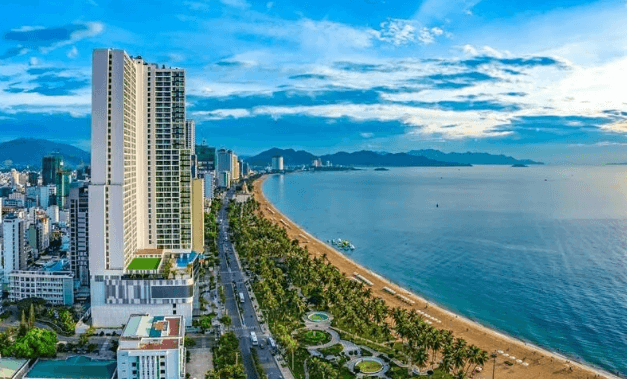
Da Nang is often pictured through its beaches, bridges, and urban center. But the city’s tourism potential is much broader. Da Nang’s tourism strategies also identify the potential of its mountains, rivers, forests, and sea, along with ecotourism, community-based tourism, cultural tourism, and traditional craft villages.
Heading west and northwest, you’ll find Hoa Bac with its Cu De River, mountains, forests, and the Co Tu community. To the southwest are villages like Tuy Loan, Cam Ne, and Phong Nam. Around Son Tra and the northern part of the city, however, are coastal areas, rocky cliffs, and traditional craft villages, presenting a completely different landscape.
Therefore, instead of asking “What is Da Nang famous for?” , try asking:
“If we ignore the well-known places, what else can we see in Da Nang?”
This article selects places worth exploring if you want to see a less familiar side of Da Nang.
SON TRA PENINSULA – THE UNPRECEDENTED BEAUTY OF THE MOUNTAIN-SEA ROAD
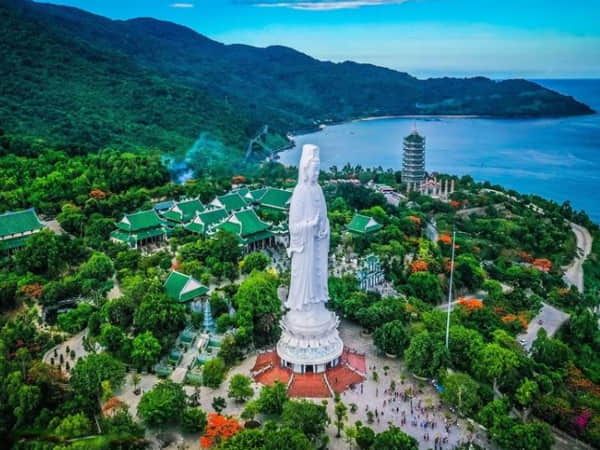
1. Chessboard Peak – Go there more for the scenic route than for the photo opportunities.
Ban Co Peak has long ceased to be a secret of Da Nang. However, what makes this place truly worth visiting isn’t the statue or the photo spot at the summit. The most attractive feature is the road leading up there. From the coastal roads at the foot of the peninsula, the journey gradually turns into winding curves through the forest. The higher you go, the clearer the city below unfolds with layers of overlapping landscapes: the Han River, Da Nang Bay, the bridges, and the distant mountain ranges to the west.
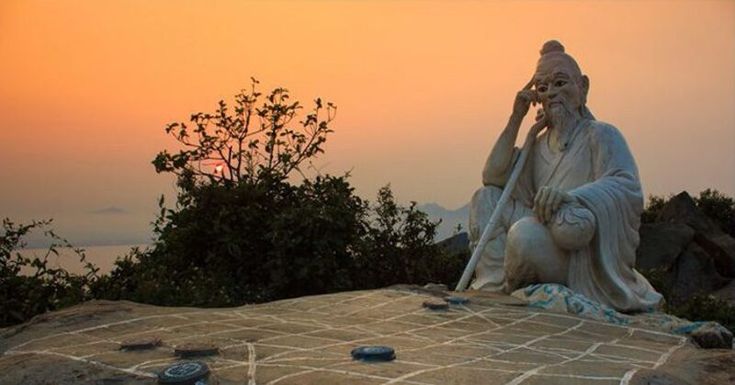
Many people only spend a few minutes at the summit before turning back. Meanwhile, the most memorable part of the trip often lies in the random stops along the way, where you can observe the city from completely different perspectives. If you consider Ban Co Peak as your only destination, you might miss the most exciting part of the Son Tra trek.
Ideal time: Dawn or late afternoon.
Suitable for: People who enjoy scenic drives and landscape photography.
2. The Thousand-Year-Old Banyan Tree of Son Tra – A Witness to the Ancient Forest
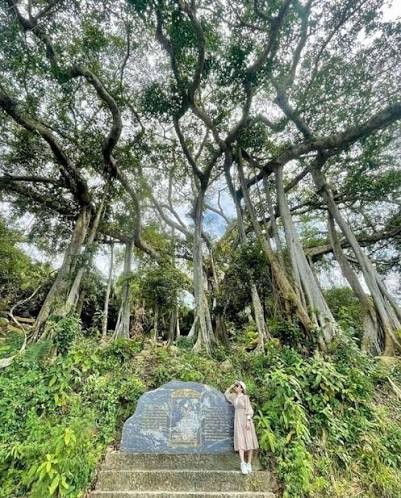
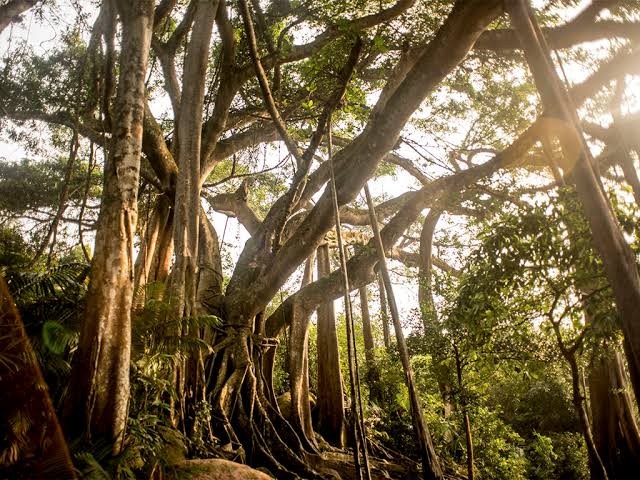
Amidst the coastal roads and famous viewpoints of Son Tra, there exists a place that is completely different: the ancient banyan tree, often called the thousand-year-old banyan. What makes this place memorable isn’t its photo-worthy value, but the awe-inspiring feeling of standing before a living organism that has existed for generations. Its enormous roots cling deep to the mountainside, and its branches spread out in many directions, creating a structure that resembles a miniature forest.
The area surrounding the banyan tree is characteristic of the Son Tra ecosystem, with high humidity, insect sounds, and a lush green canopy of multiple layers of vegetation. It’s one of the few locations on the peninsula that allows visitors to better appreciate the ecological value of the nature reserve, rather than simply admiring the view from high vantage points. If you take the time to observe carefully, you’ll see that the beauty of this place comes from the small details: the moss clinging to the trunk, the intricate root system, and how the tree has survived in its natural environment for such a long time.
Suitable for: Nature lovers, ecologists, and forest explorers.
Note: Do not climb on the tree roots, carve, or otherwise affect the surrounding natural environment.
3. Ghen Bang – for nature lovers

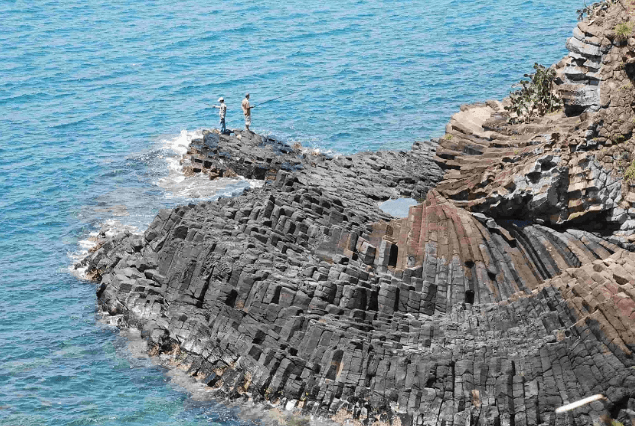
Ghen Bang is an option for those who want to find a different side of Son Tra than the popular tour route. It was once considered one of Da Nang’s lesser-known tourist destinations, alongside Yen Ngua Beach, Ba Do Phot Waterfall, and several other natural attractions.
The defining feature of Ghenh Bang is its rocky coastal terrain and the feeling of being closer to nature. However, safety should be prioritized when taking photos . The rocky coastal terrain can be slippery and change depending on the weather and tides. It’s not advisable to attempt to access difficult-to-reach areas just for a picture.
You should go if you enjoy nature and exploration.
You shouldn’t go if: you’re looking for a flat, easily accessible destination for all members of the family.
4. Black Rock Beach – Where Son Tra Mountain Showcases Its Most Pristine Beauty
When first hearing about Black Rock Beach, many people imagine it as just another beach in Da Nang. However, its appeal doesn’t lie in the sand. Black Rock Beach impresses with its dark-colored, natural rock formations that stretch along the water’s edge, creating a landscape almost in stark contrast to the wide, flat beaches in the city center. From various vantage points on the rocky outcrops, one can simultaneously observe the blue sea, the Son Tra forest, and the layers of rock eroded by the waves over time.
The most appealing aspect of Black Rock Beach isn’t a specific landmark to photograph and then leave, but rather the feeling of being surrounded by a natural space largely untouched by tourist constructions. The sound of waves crashing against the rocks, the water trickling between the crevices, and the green of the peninsula behind create a completely different experience compared to crowded beaches.
When you arrive here, you’ll notice the pace of the trip naturally slows down. Instead of searching for famous photo spots, many people spend time walking along the rocky cliffs, observing the coastal landscape, or simply sitting and gazing at the sea for an extended period.
Ideal time: Morning or on clear, calm days.
Suitable for: Nature lovers, landscape photographers, and anyone who enjoys exploring uncrowded spaces.
Note: Rocky surfaces can be very slippery when there are waves or after rain. Wear shoes with good grip and avoid approaching the water’s edge when the sea is rough.
5. Yen Ngua Beach – a less “urbanized” corner of Son Tra.
Located on the Son Tra Peninsula, Yen Ngua Beach offers a different experience compared to other popular destinations. Its landscape is dominated by rocks, the sea, and natural surroundings. It’s also one of the lesser-known spots in Da Nang.
The most valuable thing isn’t trying to turn this place into a “secret check-in spot,” but rather taking the time to observe the Son Tra landscape from a less crowded angle. If you go to Son Tra, spend time with nature instead of just rushing past to take pictures.
6. Bai Bac – A Less Mentioned Part of Son Tra
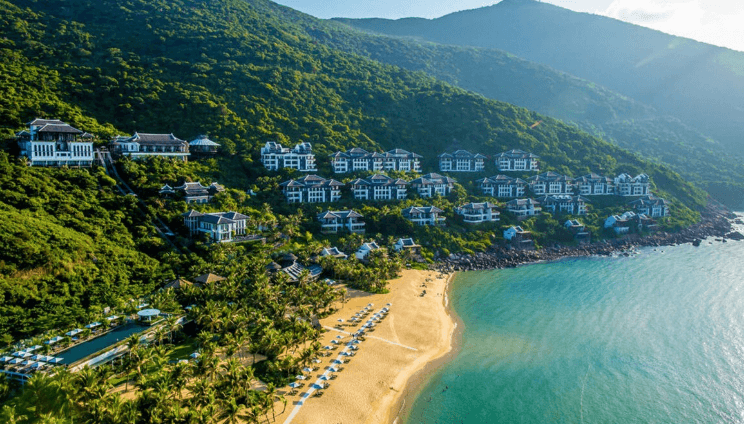
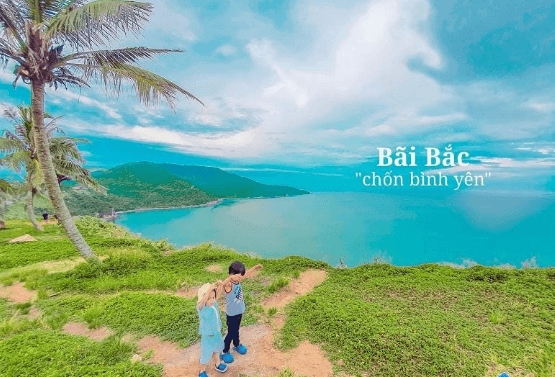
When talking about Da Nang’s beaches, most tourists usually think of My Khe or the beaches near the city center. But in the northeast of Son Tra Peninsula, Bai Bac offers a completely different feeling. What makes Bai Bac special is the combination of mountain and sea landscapes in one setting. Instead of high-rise hotels or crowded coastal roads, it is surrounded by mountain slopes, natural vegetation, and the deep blue waters characteristic of the Son Tra area.
The journey to Bai Bac is also part of the experience. The deeper you go into the peninsula, the more the urban landscape recedes. The winding mountain roads offer constantly changing views of the sea, creating the feeling of entering another world just a few dozen minutes from the city center. Bai Bac is not a destination for bustling activities. Its greatest value lies in its scenery and the feeling of being close to a less disturbed natural area of Son Tra.
Notable feature: One of the rare areas in Da Nang where mountains and the sea almost touch.
Suitable for: People who enjoy sightseeing, exploring by motorbike, and seeking out quiet seaside spots.
7. Rang Beach – Where the Sea in Da Nang Slows Down
Not every travel experience needs a long list of activities. Rang Beach is the kind of place that shows that sometimes the greatest value of a place lies in not having to do anything at all. Unlike crowded city beaches, Rang Beach is made up of coastal rocks, clear water, and patches of green trees casting shadows on the water’s edge. The landscape changes with the light of day, especially in the afternoon when the slanted sunlight creates different layers of color on the water and rocks.
This is the perfect spot for those who enjoy sitting for long periods, reading, gazing at the sea, or taking landscape photos. The space isn’t huge, but it’s enough to create a feeling of being detached from the hustle and bustle of city life, just a short distance from the center. The most appealing aspect of Bai Rang Beach lies in its relative tranquility, a rarity in a tourist city like Da Nang.
Suitable for: People who enjoy tranquility, photography, and nature.
Suggestion: Allow at least one to two hours instead of just a quick visit.
8. Nghê Cape – The Place That Welcomes the First Rays of Sunlight on Son Tra Peninsula
Among the many highly adventurous destinations in Da Nang, Mui Nghe is often mentioned as one of the most unique.
However, recently the location has been strictly restricted and access prohibited due to safety concerns.
Located on the eastern promontory of Son Tra Peninsula, Mui Nghe offers the feeling of standing on the boundary between mountains and the ocean. The area shows few traces of tourist structures; instead, it boasts natural rocky terrain, expansive sea views, and almost unobstructed vistas. Unlike many popular tourist destinations, Mui Nghe’s appeal doesn’t lie in a prominent structure or iconic photo spot.
The most memorable thing was the journey to get there. The closer we got to the area, the more pristine the landscape became, and the sense of discovery grew stronger.
On clear days, the view from Mũi Nghê allows you to observe a vast expanse of sea stretching to the horizon. This is also why many people choose this place to watch the sunrise or experience short trekking trips combined with exploring nature.
Ideal time: Early morning, especially during the dry season.
Suitable for: People who enjoy trekking, exploring, and experiencing the outdoors.
Note: It is important to carefully check the route conditions, weather, and prepare sufficient drinking water and appropriate footwear before the trip.
9. Tien Sa Lighthouse – Where Da Nang Appears from the Perspective of Seafarers

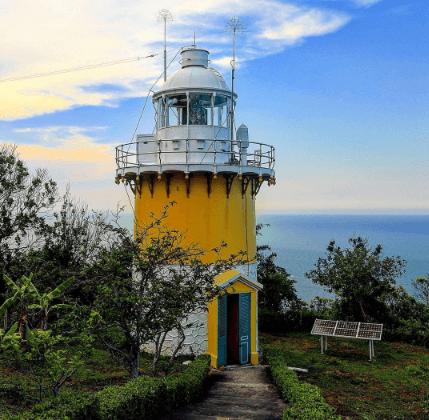
While most viewpoints in Da Nang offer city-to-sea views, the Tien Sa Lighthouse tells a story in the opposite direction. Situated on the slopes of the Son Tra Peninsula, this lighthouse has stood for generations as ships traversed the central Vietnamese sea. Therefore, its value lies not only in its scenery but also in its role in Da Nang’s maritime history.
The most appealing aspect of visiting Tien Sa Lighthouse is the feeling of being detached from the usual tourist pace. The road leading there winds through relatively tranquil stretches of Son Tra forest before opening up to a wide expanse overlooking the sea. From the area surrounding the lighthouse, one can take in a panoramic view of part of Da Nang Bay, the Son Tra peninsula, and the offshore shipping lanes.
If you arrive early in the morning, when the sunlight is still soft and the sea is not yet obscured by mist, the scene becomes even more special. Ships in the distance appear as tiny dots against the blue backdrop of the sea and sky, helping viewers understand why this location was once so important to maritime navigation. The most memorable aspect of Tien Sa Lighthouse is not its massive architectural structure, but the feeling of standing in a place that guided ships at sea for many years.
Suitable for: People who enjoy history, seascapes, and exploring the Son Tra Peninsula.
Note: Some areas may be under separate jurisdiction or have subject to changing visitor regulations. Please check for the latest information before your trip.
HOA BAC & CU DE RIVER
1. Hoa Bac – a Da Nang of mountains, forests, and the Cu De River.
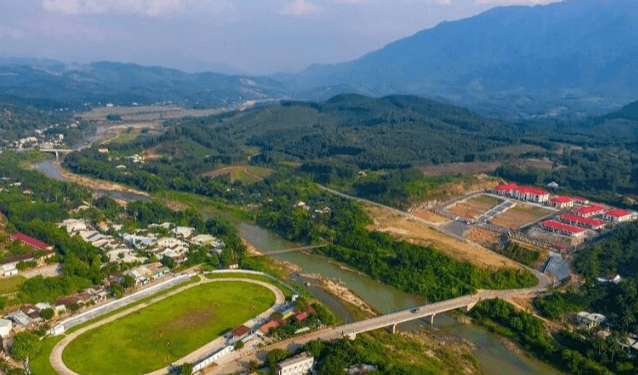
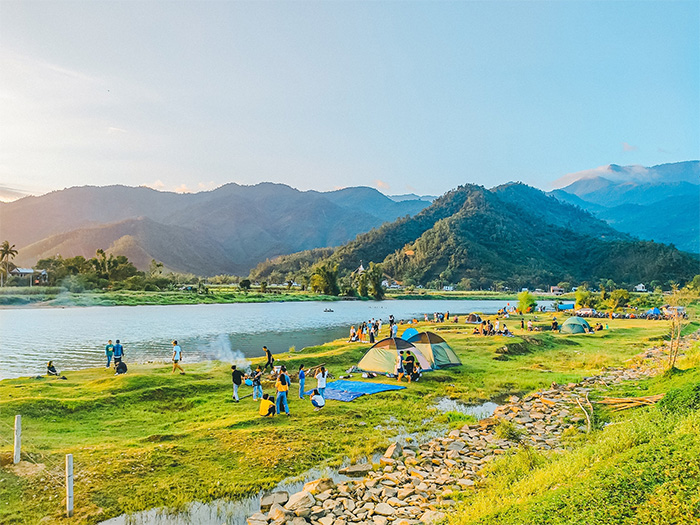
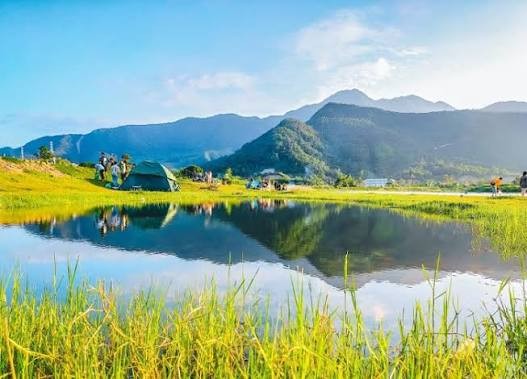
While the sea is the most familiar image of Da Nang, Hoa Bac presents a completely different picture. Located a few dozen kilometers northwest of the city center, Hoa Bac is nestled amidst mountains, forests, rivers, streams, and indigenous communities. It boasts forests, rivers, streams, waterfalls, and a landscape that retains its natural beauty; the area is also developing ecotourism and community-based tourism.
The appeal of Hoa Bac lies not in any specific structure but in the entire landscape and scenery . You can spend a day driving along the mountain roads, stopping by the Cu De River, finding a natural resting place, or combining it with experiencing the local culture.
It’s especially worth exploring Ta Lang – Gian Bi.
This area is closely associated with the Co Tu community in Hoa Bac. The community-based tourism model here has been implemented by the city since 2019, with the aim of preserving Co Tu culture, traditional crafts, and ecological landscapes.
The Gươl House is also a noteworthy point. For the Cơ Tu people, it is an important communal space of the village, associated with traditional cultural activities. It’s not a place for a quick check-in; it serves as a venue for sightseeing, learning about traditional culture, and showcasing Cơ Tu handicrafts.
The value of a destination lies in the story behind its architecture. If My Khe Beach shows you Da Nang as a coastal city, the Gươl House reveals a different side of Da Nang: its mountainous region and community culture . In 2025, the Ta Lang – Gian Bi Ecological Agriculture and Community Tourism Cooperative will also be launched with the goal of preserving Co Tu culture, creating livelihoods, and developing community tourism.
Suitable for: nature lovers, slow travelers, local culture enthusiasts, and those who enjoy trips away from the city center.
Time to dedicate: nearly a day or longer for a more in-depth experience.
Note: Hoa Bac has many ravines, streams, rapids, and mountain roads; it is recommended to avoid visiting during the rainy season due to slippery and more dangerous conditions.
2. Vung Bot – where the Cu De River begins its journey.
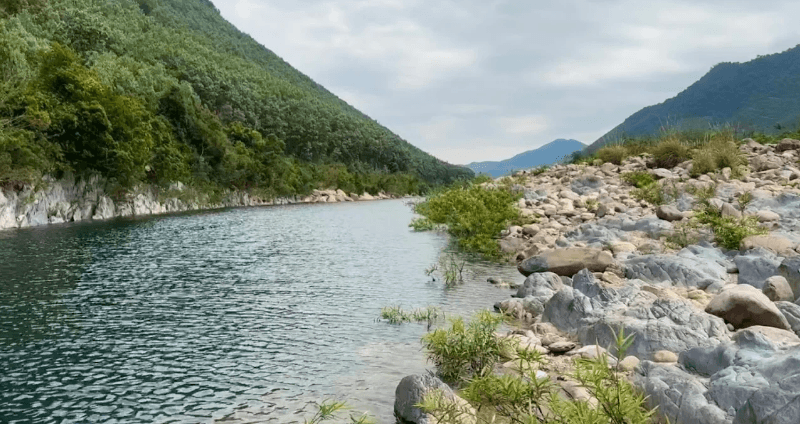
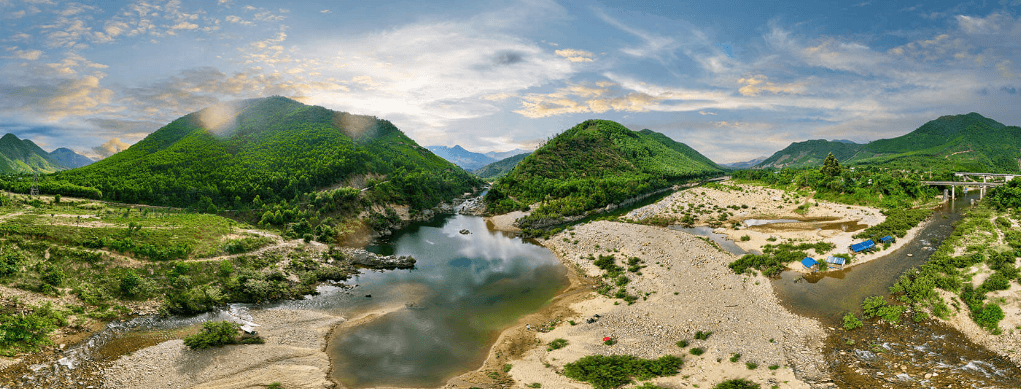
If Hoa Bac is a region for exploration, then Vung Bot is a small but unique spot. Vung Bot is the confluence of the North and South rivers, forming the source of the Cu De River. Located within the mountainous Hoa Bac region, the area boasts relatively unspoiled rivers, streams, and natural landscapes. The interesting thing is that you don’t come here to “check in at a landmark.” You come to be surrounded by nature .
At Vung Bot, you can enjoy activities such as fishing, shrimp catching, and swimming in the stream; however, it’s advisable to go with a local who knows the area well to ensure safety.
This type of place is suitable for those who like the feeling of truly escaping the city , rather than just looking for a cafe with mountain views.
Suitable for: people who love nature and eco-friendly experiences.
Not suitable if: you want a destination with complete or easily accessible tourist services.
3. Me Village – Hoa Bac: A place to slow down.
There are places that don’t need too much activity. Me Village in Nam Yen, Hoa Bac is one example. It offers views of the Cu De River and mountains, making it ideal for picnics, camping, and relaxation. The secluded location, away from residential areas, creates a more tranquil atmosphere.
The charm of Me Village lies in its simplicity: a green space. A river. Mountains in the distance. And a day without having to visit too many places. If your Da Nang itinerary is already packed, this could be the kind of place to make your trip more relaxing .
4. Hoi Yen Parish Church – a very different corner of Hoa Bac.
Located in the Hoa Bac area, Hoi Yen Parish boasts a unique landscape thanks to its position between mountains and a river. The church is described as being situated “backed by mountains and facing the water,” with rice fields in front, creating a relatively distinctive scenery. This isn’t a destination you need to spend hours visiting; it’s more suitable as a stop along the Hoa Bac route .
If you enjoy photography, pay attention to the contrast between the church architecture, the mountains in the background, and the surrounding agricultural landscape. When visiting, it is important to show respect for the religious space and the life of the local community.
LAND OF MEMORIES: NAM O & VAN VILLAGE
1. Nam O Cliff – Where the Sea Created a Sculpture with Its Own Hands
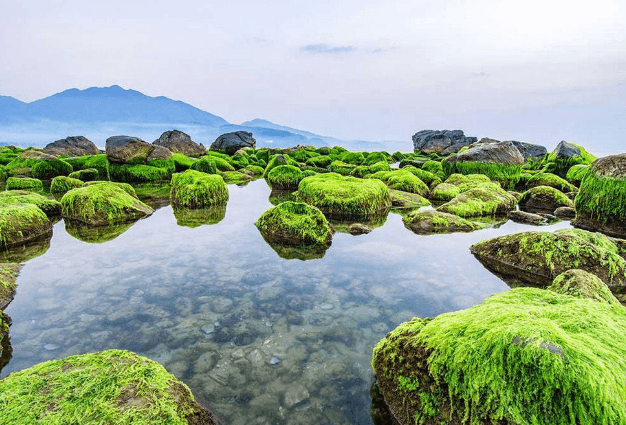
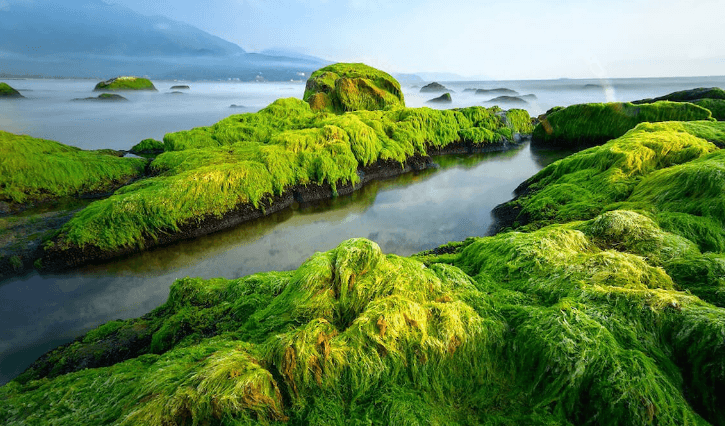
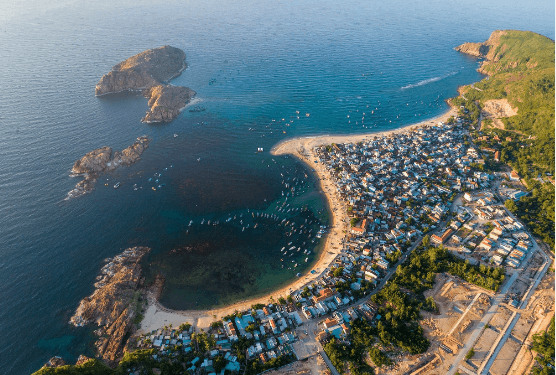
From a distance, many people only think of Nam O as a seaside village located at the northwestern gateway to the city. But when the tide recedes, a completely different world begins to appear. Nam O reef is a collection of natural rock formations stretching along the coast, eroded by waves and time into various shapes.
What makes this place special isn’t its scale, but the ever-changing landscape that shifts with the seasons and sea level. At the right times, layers of green moss cover the rocks, creating contrasting patches of color against the seawater and the gray of the rocks. When the early morning sun shines down, the entire area is bathed in a soft light, making the landscape much more vibrant.
The most fascinating thing about Nam O Cliff is that you can’t experience it the same way every time. A day with rough seas and a day with low tide can create two almost completely different scenes. This is why many photographers are willing to return multiple times just to wait for the right lighting and tide conditions.
Ideal time: Early morning, on days with low tide and stable weather.
Suitable for: Nature lovers, landscape photographers, and those exploring coastal geology.
Tip: Check the tide schedule before you go. This is one of the few places in Da Nang where the timing of the tides can be as important as the location itself.
2. Nam O Fish Sauce Village – A Story of Fermentation in Wooden Barrels
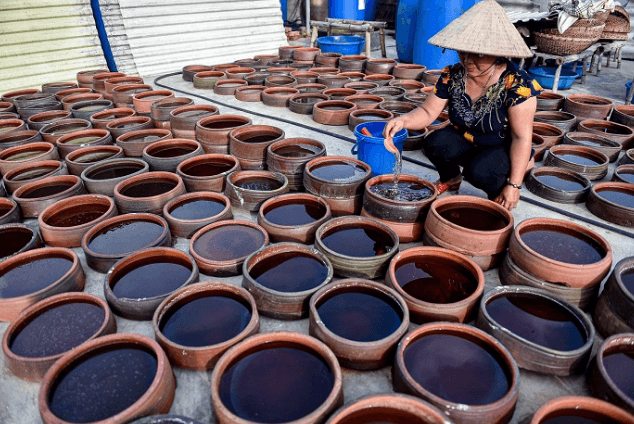
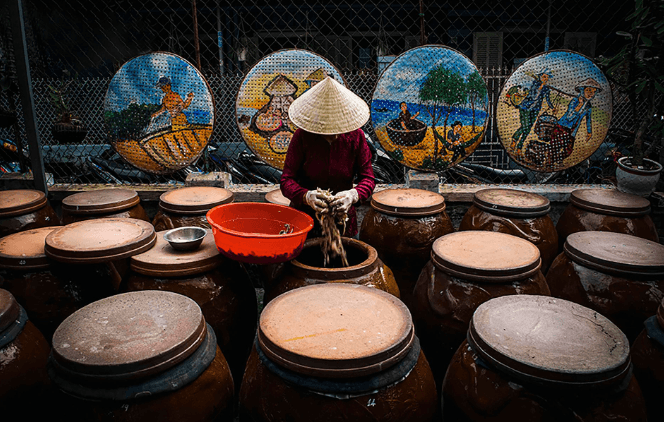
If Nam O Reef tells the story of nature, then the traditional fish sauce making village of Nam O tells the story of its people. Amidst Da Nang’s rapid urbanization, the traditional fish sauce making craft still survives as a part of the memories of this coastal village.
What’s worth discovering here isn’t just buying a bottle of fish sauce to take home, but understanding how a craft can survive for generations. Upon entering the production area, the first thing you notice is the distinctive smell of fish and sea salt. Large wooden barrels, a fermentation process lasting many months, and experience passed down within each family create the unique value of this traditional craft village.
Interestingly, each step reflects the connection between the local people and the sea. From the selection of ingredients to the traditional fermentation techniques, everything is linked to experience accumulated over a long period. This isn’t the kind of experience that yields the most impressive photos, but it’s a place where visitors can gain a deeper understanding of Da Nang’s maritime culture.
Suitable for: People who love local culture, traditional crafts, and experiential tourism.
It’s worth going because: You’ll bring back a story and a new perspective on the lives of fishermen, not just a souvenir.
3. Van Village – A Village Once Isolated from the Rest of the City
Nestled at the foot of Hai Van Pass, between towering mountains on one side and the vast sea on the other, Van Village was once one of the most isolated places in Da Nang. For many years, this small village was almost completely cut off from urban life. To reach it, one had to hike along mountain paths or approach by boat from the sea. This very isolation created a unique appeal for Van Village in the eyes of those who love exploration.
What makes this place memorable isn’t a landmark or a famous check-in spot. Its greatest value lies in the feeling of being surrounded by the vast blue sea in front and the majestic Hai Van mountain range behind. On clear days, the scenery feels like being in some distant seaside region, rather than just an hour’s drive from the center of Da Nang.
However, Van Village is undergoing many changes related to planning and infrastructure. Therefore, the most important thing before making any plans is to check the actual accessibility and current regulations.
Suitable for: Nature lovers who enjoy exploring lesser-known coastal areas.
Note: Do not enter restricted areas or choose routes that are not permitted.
ANCIENT VILLAGES & TRADITIONAL CRAFTS
1. Hoa Vang – A Place That Still Preserves the Rhythm of Da Nang’s Life Before Urbanization
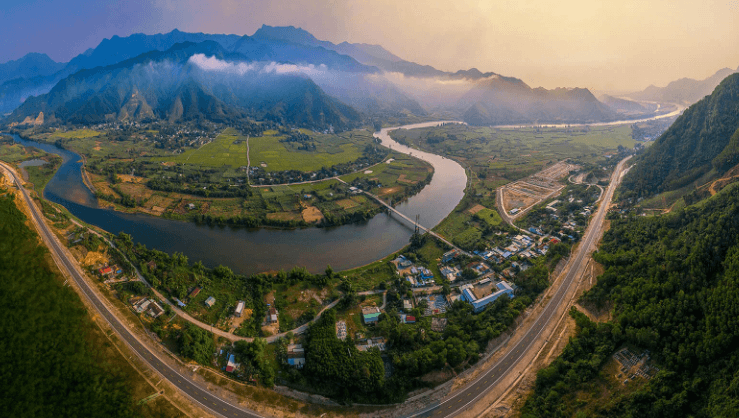
Not all the exciting experiences in Da Nang are found on the Son Tra peninsula or along the coast. If you want to see a different side of the city, take the time to travel towards Hoa Vang district. Here, small village roads still wind through the fields, ancient communal houses still stand amidst the residential areas, and life moves at a much slower pace than in the city center.
The most appealing aspect of Hoa Vang is that you don’t need a specific destination. Just drive along the rural roads in the early morning or late afternoon, and you’ll encounter scenes of people working in the fields, children cycling home, and green spaces that are becoming increasingly rare in the process of urbanization. This is the kind of experience for those who prefer observation rather than “spot collecting.”
Suitable for: Slow travel, lifestyle photography, and exploring local culture.
2. Tuy Loan Ancient Village – where Da Nang still retains the rhythm of rural life.
If you’re looking for a place with a longer history than Da Nang’s modern structures, head to Tuy Loan . The village of Tuy Loan has existed for over 500 years and is connected to the river of the same name. The Tuy Loan communal house, built in the late 19th century, is classified as a national historical and cultural relic. But what’s worth discovering here isn’t just the communal house. It’s:
- The river.
- A rural village setting.
- The ancient banyan tree.
- Houses and traces of community life.
- Local market.
- Traditional crafts.
If you visit at the right time, you can combine it with exploring the Tuy Loan rice paper making village . This is a great way to see Da Nang from a less urban perspective.
Tuy Loan Rice Paper Village – where the journey begins with the aroma of freshly baked rice paper.
Tuy Loan is not only known for its rural landscapes. It is also famous for its rice paper making tradition, preserved through many generations. The Tuy Loan rice paper making craft is recognized as an integral part of the village’s cultural life, with ingredients and flavors characteristic of the region.
The most appealing aspect is seeing the production process instead of just buying the finished product . You can observe the handcrafted steps, learn how the cakes are made, and enjoy freshly baked goods on the spot. This is also one of the places that should be combined with Tuy Loan, rather than considered as a standalone destination.
3. Phong Nam – finding a countryside village in the middle of the city.
Da Nang is developing rapidly, but rural areas are still interspersed within the urbanization process. Phong Nam – Phong Le is one of them. This area is associated with the rural landscape along the Cam Le River and traditional agricultural cultural values.
A special highlight is the Phong Le Village Shepherd Festival , maintained with rituals related to the God of Agriculture, agricultural life, and the image of young buffalo herders. The 2026 festival will take place at the God of Agriculture Temple, Con Than Hill, and the Phong Nam village area. If you visit during the festival season, it’s a very different cultural experience compared to a typical beach tourism itinerary. If you don’t visit during the festival season, the value of Phong Nam lies in its rural atmosphere and cultural stories .
4. Cam Ne mat-making village – a traditional craft that is being preserved
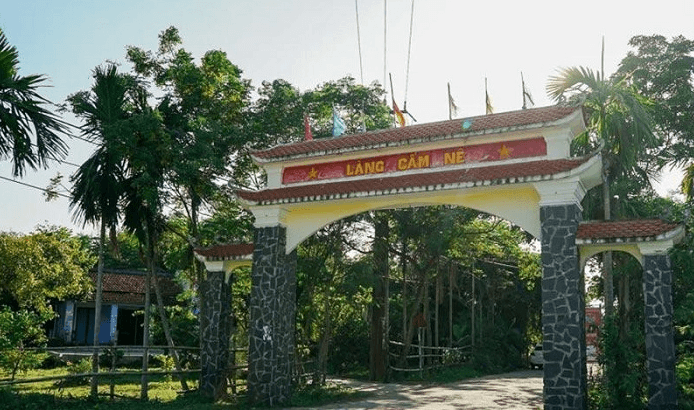

Da Nang is not just about traditional fish sauce or rice paper making villages.
Cam Ne is a place steeped in the traditional craft of hand-weaving mats, passed down through generations. It’s known that this craft is still maintained here, although the number of households practicing it has decreased compared to the past. The most interesting thing about visiting Cam Ne is witnessing the actual hand-weaving process . The looms, the sedge fibers, the colors, and the movements of the weavers create a completely different experience from simply standing before an ancient structure. Cam Ne also has a village communal house that has been recognized as a city-level historical monument.
Suitable for: people who enjoy culture, traditional crafts, photography, and slow-paced travel.
5. Phong Nam – finding a countryside village in the middle of the city.
Da Nang is developing rapidly, but rural areas are still interspersed within the urbanization process. Phong Nam – Phong Le is one of them. This area is associated with the rural landscape along the Cam Le River and traditional agricultural cultural values.
A special highlight is the Phong Le Village Shepherd Festival , maintained with rituals related to the God of Agriculture, agricultural life, and the image of young buffalo herders. The 2026 festival will take place at the God of Agriculture Temple, Con Than Hill, and the Phong Nam village area. If you visit during the festival season, it’s a very different cultural experience compared to a typical beach tourism itinerary. If you don’t visit during the festival season, the value of Phong Nam lies in its rural atmosphere and cultural stories .
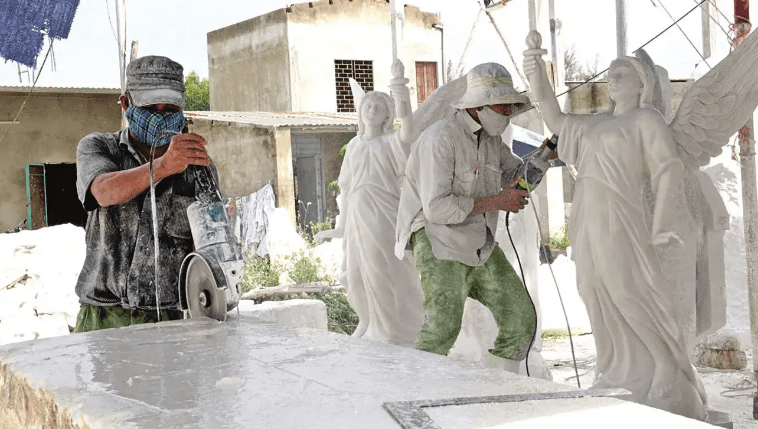
6. Non Nuoc Stone Carving Village – Where Stone Is More Than Just Stone
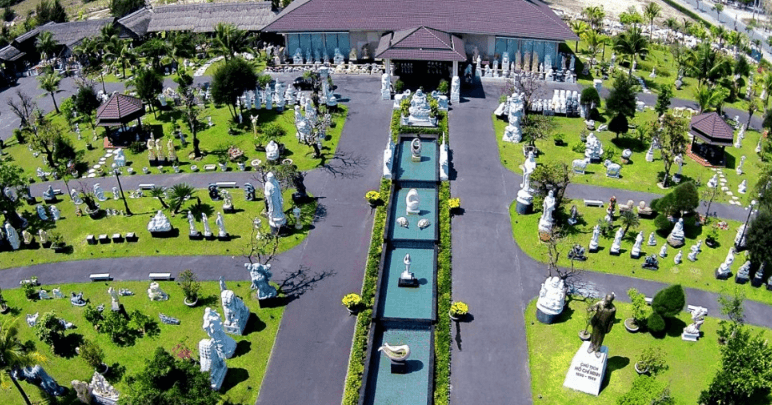
Many tourists visit Marble Mountains to explore the caves, temples, and scenic viewpoints.
But right at the foot of the mountain lies a much more special place: the Non Nuoc stone carving village.
What sets this place apart isn’t the finished products displayed in the shop, but the process of transforming rough blocks of stone into works of art.
The sound of stone-cutting machines, the white dust covering the workshop floor, and the craftsmen meticulously shaping each small detail create a unique atmosphere that is hard to find at typical tourist destinations.
Every finished work of art begins with lifeless blocks of stone. And it is this transformation journey that is most worth watching.
Worth experiencing if: You want to gain a deeper understanding of Da Nang’s traditional crafts.
7. Handicraft Workshops Around the Landscape – The Story Behind Each Artwork
You can only see the final product by visiting the showrooms.
But the real story begins when you step inside the operating factories.
There, the craftsmen work not only with machines but also with experience accumulated over many years. Every detail is created through a combination of technique, material feel, and patience.
Interestingly, each artisan has their own unique way of working. Some specialize in Buddha statues, while others focus on feng shui mascots or architectural decorative details.
This is where you understand that the value of a handcrafted product lies not in the materials but in the hands that created it.
Tip: Always ask permission before taking photos of the worker.
SERENE LAKES
1. Dong Nghe Lake – where Da Nang turns green.
Dong Nghe Lake is located a few dozen kilometers west of the city center and is a large reservoir nestled amidst hills and mountains. It was once featured on the Da Nang Tourism Portal as an ecological destination with its scenic river, mountain, and water landscape.
The most appealing aspect of Dong Nghe is the scale of its space . Instead of standing before a small landscape, you feel like you’re standing before a large painting, with the lake stretching between the mountain slopes. For those who want to explore more actively, activities such as boating, cycling, or camping have been developed in this area.
However, check the actual weather conditions and service availability before you go, as this isn’t the kind of destination where you can assume all services will always be operational.
2. Hoa Trung Lake – where you can find a very peaceful Da Nang.
Hoa Trung Lake is one of the most suitable locations if you want to find a spacious, airy environment with less of a city feel. The lake serves both as a water source and a base for agricultural production. Surrounding it are floating islands and grasslands, creating a landscape very different from the typical coastal scenery of Da Nang. One of the times when the landscape changes noticeably is when the water level drops, revealing larger areas of grass and land.
The most memorable aspect of Hoa Trung isn’t a specific “Instagrammable spot,” but rather the sense of openness . You can sit by the lake, gaze at the water’s surface, watch the changing light at the end of the day, and enjoy a trip that doesn’t involve too many sights.
Suitable for: couples, groups of friends, landscape photography enthusiasts, and relaxing trips.
HISTORICAL & CULTURAL IMPRINTS
1. Cham Sculpture Museum – A Place That Helps You Understand Central Vietnam in a Different Way
Many people come to Da Nang to find the beach. Some come to explore nature. But if you want to understand this land more deeply, the Cham Sculpture Museum might be the first place to visit, rather than the last.
What makes this museum special is not only the scale of its collection but also its ability to help viewers connect the scattered landmarks throughout Central Vietnam into a unified story. Inside the exhibition rooms, sandstone sculptures have survived for centuries. Each artifact reflects a part of the beliefs, art, and life of the Champa kingdom that once flourished in the central region.
Upon closer examination of the patterns, statues, and reliefs, viewers will recognize many details that have appeared at My Son, Tra Kieu, and other Cham relics in the region. That is why this museum is not only for history enthusiasts. It is also suitable for anyone who wants to gain a deeper understanding of the land they are exploring.
Suitable for: People who love history, architecture, art, and culture.
Suggestion: Spend at least one to two hours exploring instead of just glancing over. The greatest value lies in reading the stories behind the artifacts.
2. Da Nang Museum – Reading the City Through Layers of Time

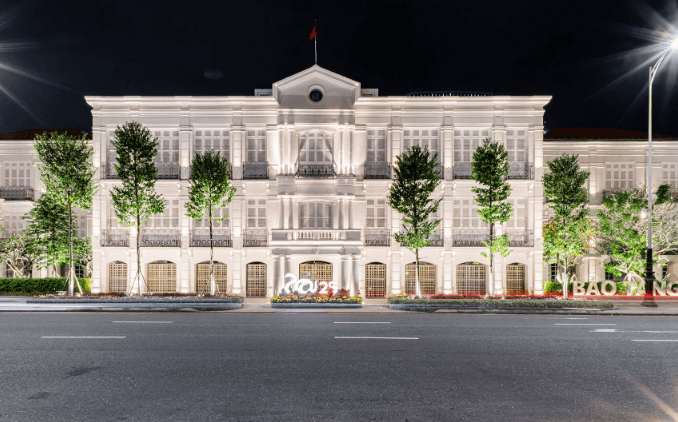
Da Nang today is often known as a young, modern, and rapidly developing city. But to understand why the city has become what it is today, you need to look back at the layers of history behind it. The Da Nang Museum connects those pieces. From the history of the land’s formation and the stages of urban development to the transformations in culture and society, everything is recounted through artifacts and documents.
This is a suitable destination for hot, sunny days or unfavorable weather, but it also makes the trip more meaningful than just visiting scenic spots.
Suggestion: Don’t just photograph the artifacts. Take the time to read the captions and the stories behind them.
3. Hai Chau Temple – A Quiet Moment of History in the Heart of the City
Amidst bustling streets, modern buildings, and the relentless pace of urban life, Hai Chau Temple stands as a rare oasis of tranquility, a remnant of old Da Nang. It is one of the structures closely associated with the formation of the first residential community in the Hai Chau area.
The interesting thing isn’t the scale of the architecture, but the striking contrast between the inside and outside of the temple gate. Just stepping through the gate, the sounds of traffic seem to subside. The space becomes quieter, and the rows of wooden columns, tiled roof, and traditional decorative details create the feeling of stepping into another dimension.
Hai Chau Temple is not a place to spend hours visiting. It’s the kind of place suitable for a leisurely city walk, when you want to learn about how a modern city was formed from its earliest communities.
Suitable for: People who love urban history, traditional architecture, and local culture.
4. Da Nang Cathedral – A Piece of Europe in the Heart of the City
Located in the bustling city center, Da Nang Cathedral – often referred to by its familiar name, “Chicken Church” – is one of the city’s most recognizable landmarks. However, its value lies not only in its distinctive pink color or Gothic architecture that makes it stand out on social media.
What’s even more interesting is the building’s role in shaping the modern urban landscape of Da Nang. The architectural details, archways, bell tower, and how the building blends into the surrounding neighborhood reflect the imprint of a different historical period in the city’s development. If you visit in the morning, the light shining through the windows creates beautiful patches of color and shadow on the building’s surface. This is also the ideal time to observe the architecture without being overly affected by crowds of visitors.
Worth visiting if: You are interested in urban architecture and the history of Da Nang’s formation.
5. Nguyen Van Troi Bridge – The Old Bridge Tells the Story of the New City
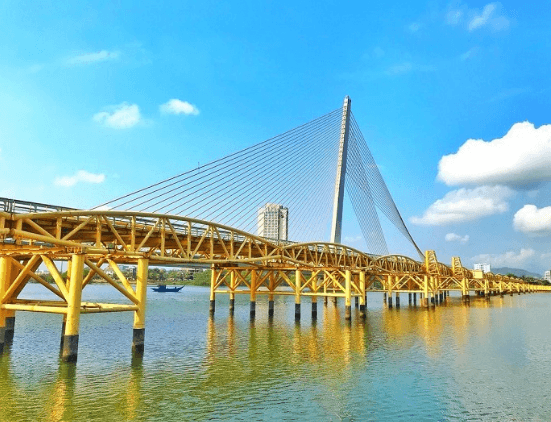
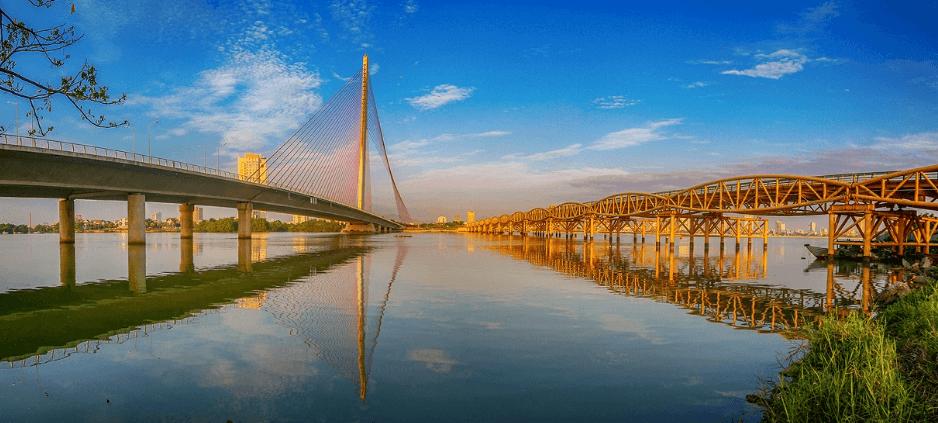
While many new bridges across the Han River stand out for their modern technology and design, the Nguyen Van Troi Bridge is appealing in a different way. It is a bridge steeped in history and has now become a pedestrian space.
From the bridge, you can observe the Han River, the modern bridges in the distance, the city center buildings, and the people moving below. The interesting thing is the contrast: an old bridge, yet an ideal place to admire a city that is constantly changing.
The best time: Late afternoon, when the city lights begin to come on.

Bài viết liên quan